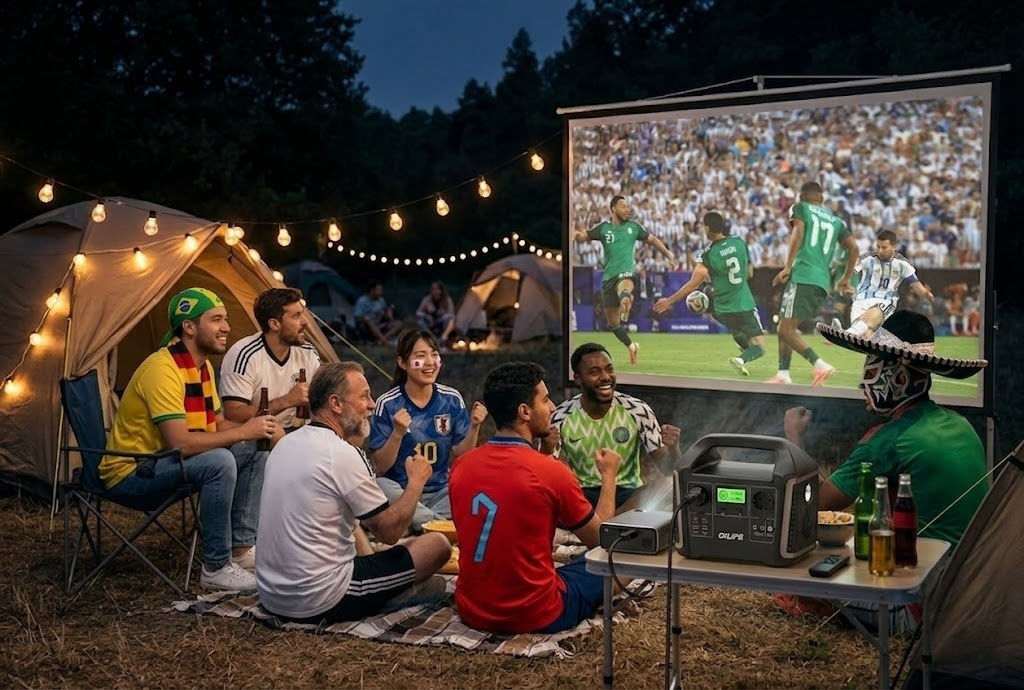
With the FIFA World Cup 2026 underway, football is once again becoming a global focal point. But beyond the stadium lights, broadcast studios, and official fan zones, something more subtle is happening — the way people experience football is becoming increasingly mobile, flexible, and decentralized.
Today, the World Cup is no longer confined to fixed venues. It lives in parks, beaches, campsites, backyards, and temporary outdoor gatherings where people come together to share the game on their own terms.
This shift is changing more than just where football is watched. It is changing what makes these experiences possible.
Football is no longer tied to infrastructure
Traditionally, watching or participating in football-related events required access to stable infrastructure — stadium lighting, fixed power supply, and controlled environments.
But modern viewing habits tell a different story.
Grassroots teams train in public spaces. Friends gather outdoors to watch live matches. Communities create temporary fan zones in places never originally designed for events.
What connects all of these experiences is not location — but access.
Access to visibility, connectivity, and increasingly, reliable energy.
The hidden enabler behind modern outdoor experiences
While football remains the focus, the experience itself depends on a quiet foundation: power.
Lighting for evening training sessions. Screens for shared viewing. Audio systems, connectivity devices, and basic equipment that make outdoor gatherings functional and enjoyable.
In many cases, these setups exist far away from permanent electrical infrastructure. This makes energy availability a key factor in determining how and where experiences can take place.
Rather than being the center of attention, energy plays a supporting role — but without it, the experience simply does not happen.
Mobility is reshaping expectations
As outdoor and temporary setups become more common, expectations are shifting.
People no longer ask only “where can we watch the game?”
They increasingly ask “how can we bring the experience with us?”
This reflects a broader trend across events, sports, and outdoor activities: flexibility is becoming as important as location.
From grassroots training environments to informal viewing gatherings, the ability to operate independently of fixed infrastructure is redefining what participation looks like.
Looking forward
As the tournament continues, it will not only showcase the best teams in the world — it will also highlight how global audiences engage with the game in increasingly diverse environments.
From stadiums to open-air gatherings, football continues to evolve with the way people live, move, and connect.
And in that evolution, the supporting systems behind the scenes quietly become more important than ever.