
When people shop for a portable power station, the first thing they usually compare is battery capacity.
Is it 300Wh? 600Wh? 1000Wh?
While capacity is certainly important, it’s only part of the equation.
In real outdoor environments, emergency situations, or remote job sites, one question often becomes even more important:
How do you recharge your power station when there’s no wall outlet nearby?
The answer can make the difference between staying powered and running out of energy when you need it most.
Why Charging Flexibility Matters?
Imagine you’re camping for a weekend, working at a remote construction site, or preparing for an unexpected power outage.
A large battery can keep your devices running for hours.
But once it’s empty, what happens next?
This is why experienced users don’t just look at battery capacity—they also consider how easily the unit can be recharged in different environments.
The more charging options available, the more independent and reliable your power supply becomes.
Let’s look at the three most practical charging methods.
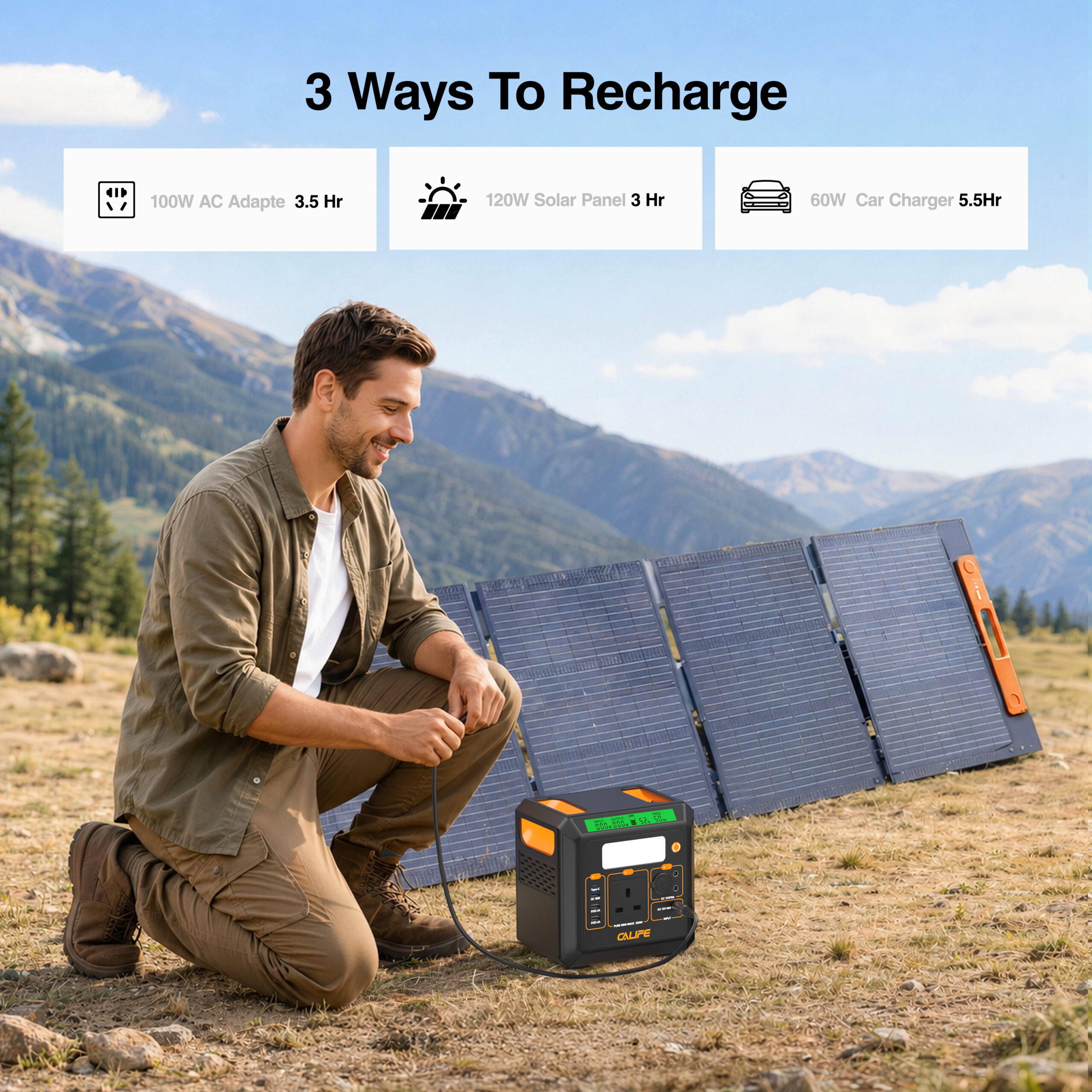
1. AC Charging – The Fastest Way to Start Fully Charged
Before leaving home or after returning from a trip, AC charging is the simplest and most efficient option.
Plug the power station into a standard wall outlet and you’ll begin your journey with a full battery.
This method is ideal for:
Preparing for camping trips
Emergency home backup
Charging overnight before work
Think of AC charging as your starting point—it ensures you’re always ready before heading off-grid.
2. Solar Charging – Creating Power Anywhere
One of the biggest advantages of a portable power station is the ability to harvest renewable energy.
By connecting compatible solar panels, users can recharge while enjoying outdoor activities, working remotely, or staying at a campsite.
Solar charging is especially valuable for:
Camping
RV travel
Off-grid cabins
Outdoor events
Remote field work
Instead of relying solely on stored energy, you’re continuously generating new power throughout the day.
For users spending several days outdoors, this can significantly extend operating time without needing access to the electrical grid.
3. Car Charging – Turning Travel Time Into Charging Time
Road trips often involve several hours of driving.
Rather than letting that time go to waste, a portable power station can be recharged from your vehicle while you’re on the move.
This is particularly useful for:
Overlanding
4WD adventures
Road trips
Mobile service teams
Field engineers
By the time you arrive at your next destination, your power station has already recovered part of its battery—without requiring any additional effort.
Portable power stations have evolved far beyond being simple backup batteries.
Today, they’re becoming an essential part of outdoor lifestyles, remote work, emergency preparedness, and mobile living.
Battery capacity is still important.
But true energy independence comes from knowing you have multiple ways to recharge wherever your journey takes you.
Whether you’re exploring off-grid, working in remote locations, or preparing for unexpected power outages, flexible charging options help ensure your power keeps going when you need it most.